Berries & kiwi · 2027 season
Duke Blueberry Bush
Vaccinium corymbosum
Better with a partnerEarly-ripening highbush blueberry with mild, sweet berries.
- #1 container
Pick up in Pittsgrove, NJ, typically in March. Pay cash, check, Venmo or PayPal at pickup.
Duke is one of the earliest highbush blueberries, and one of the most grown commercially. The berries are medium to large, firm and mild-flavored.
It blooms late but ripens early, which helps it avoid spring frost damage. Yields are reliably high.
Pair it with a later variety like Patriot or Chippewa to spread out your harvest.
Duke was bred right here in New Jersey, released in 1986 by the USDA and the New Jersey Agricultural Experiment Station, and it's now the top blueberry grown in the state. The harvest is concentrated, so the picking window is short.
How it tastes
Mild and sweet, with firm berries. Gentle rather than tangy.
At a glance
- You get
- #1 container
- Hardiness zones
- USDA 4–8 (Salem County is 7)
- Blooms
- Late, which helps it avoid frost
- Ripens
- Mid to late June
- Starts bearing
- A small crop the second year, more each year after
- Mature size
- About 5–6 ft
- Pollination
- Better with a partner
- Botanical name
- Vaccinium corymbosum
- Price
- $13 each, paid at pickup
- Pickup
- Pittsgrove, NJ, typically in March
The fruit
- Looks
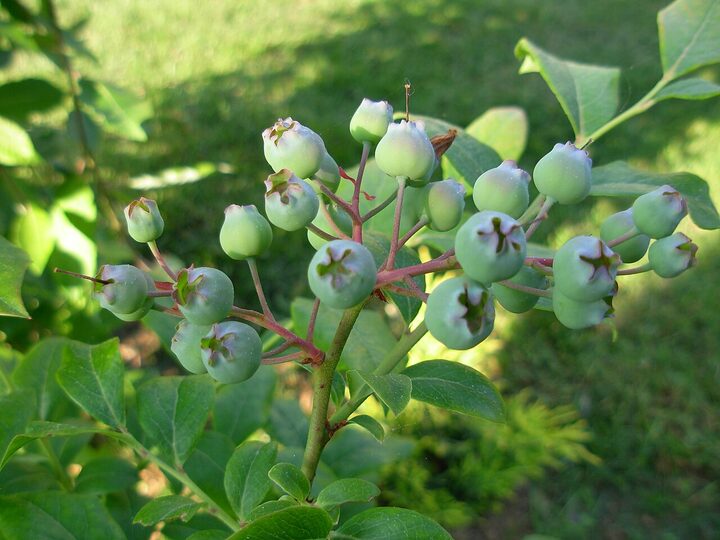
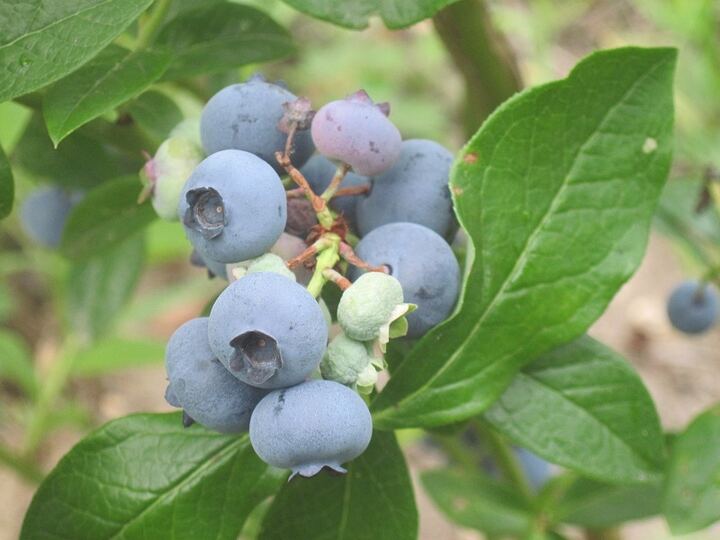
- Medium to large, light blue, firm
- Flavor
- Mild
- Best for
- Fresh, Freezing, Baking
- Keeps
- Firm berries that keep well; the flavor improves a little in the fridge
Pollination
Partly self-fertile. Planting two or more different blueberry varieties near each other gives noticeably bigger crops and berries.
Good partners from our list

Growing tips
Watch for: Young plants can get stem blight; prune out any dying canes
- Blueberries need acidic soil (pH 4.5–5.5). Much of South Jersey is naturally acidic, which is why blueberries do so well here. Test your soil if you're not sure.
- Blueberries are the exception to our native-soil rule: mix peat moss or pine bark into the planting area, and mulch with pine needles or wood chips.
- Plant two or more varieties for bigger crops.
- Keep the soil evenly moist. Blueberry roots are shallow.
- Remove the flowers for the first year so the plant puts its energy into roots.
New to planting fruit trees? Read our step-by-step planting guide: square hole, graft above the soil, native soil, and no fruit for the first two years.
Photos show the variety, not the exact plant you’ll get. Reservations are for the 2027 season, picked up at our farm in Pittsgrove, NJ, typically in March, and aren’t guaranteed until we confirm them. Questions? Ask us or call or text (856) 345‑4538.