Plums · 2027 season
Santa Rosa Plum Tree
Prunus salicina
Better with a partnerLarge, juicy, tangy-sweet Japanese plum.
- #7 container
- About 1.25" caliper
Pick up in Pittsgrove, NJ, typically in March. Pay cash, check, Venmo or PayPal at pickup.
Santa Rosa was bred by Luther Burbank in California in 1906 and is still one of the most popular plums in the world.
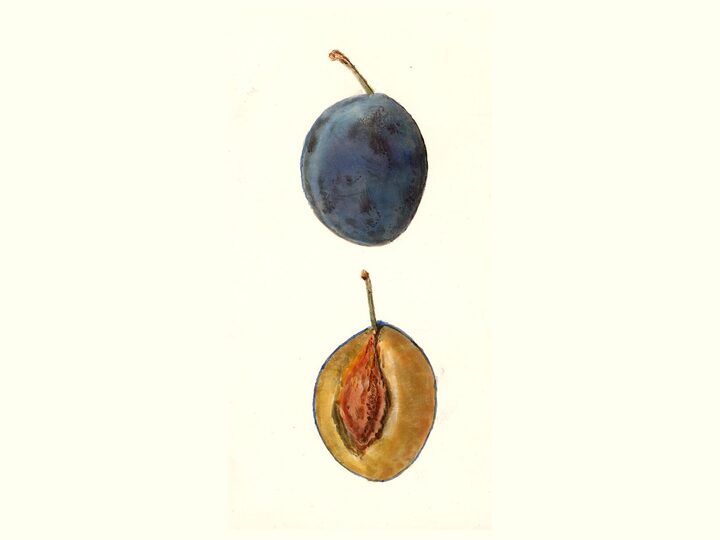
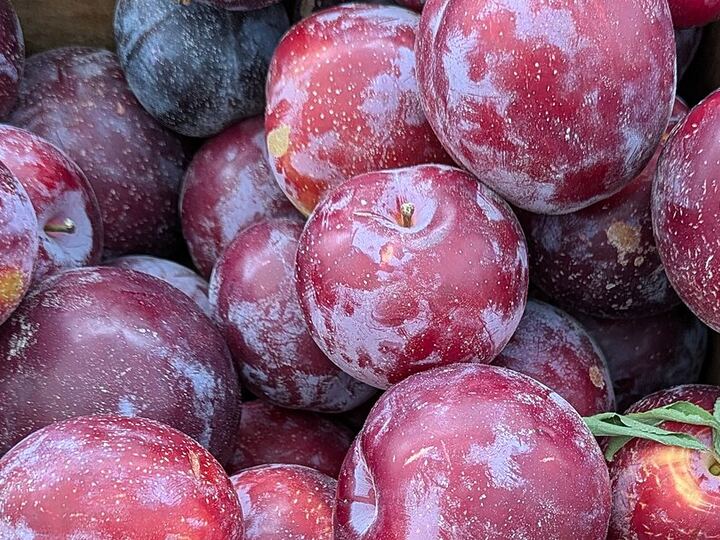
The fruit is large, with purplish-red skin and juicy, amber-to-red flesh. The flavor is tart near the skin and sweet in the middle.
Japanese plums bloom early, so plant on higher ground away from frost pockets.
Santa Rosa is one of the plums most prone to bacterial spot, which matters in our humid summers. Plant it in full sun with good air flow.
How it tastes
Tangy-sweet and very juicy. The skin is tart, the amber-red flesh is sweet and aromatic, and the contrast is what makes it famous.
At a glance
- You get
- #7 container, about 1.25" caliper (trunk thickness 6 inches above the soil; each tree varies a little)
- Hardiness zones
- USDA 5–9 (Salem County is 7)
- Blooms
- Early
- Ripens
- Early to mid July
- Starts bearing
- Usually 3–4 years after planting
- Mature size
- About 12–15 ft with regular pruning
- Pollination
- Better with a partner
- Botanical name
- Prunus salicina
- Price
- $88 each, paid at pickup
- Pickup
- Pittsgrove, NJ, typically in March
The fruit
- Looks
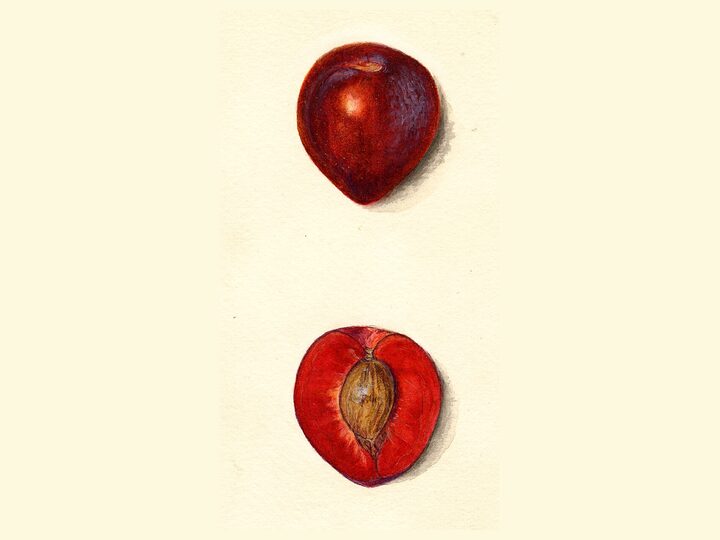
- Large, purplish-red skin, amber to red flesh; clingstone
- Flavor
- Tart near the skin, sweet in the middle
- Best for
- Fresh, Jam
- Keeps
- About a week in the fridge
Pollination
Partly self-fertile, but it bears much better with another Japanese plum nearby. Methley is the ideal partner.
Good partners from our list
Growing tips
Watch for: Very susceptible to bacterial spot (leaf holes and twig cankers) in humid weather; brown rot
- Full sun and well-drained soil.
- Thin heavy crops so the fruit is 3–4 inches apart. Plums often set more than the tree can carry.
- Watch for black knot (hard black swellings on branches) and cut it out in winter.
- Prune in late winter or early summer.
Spray schedule: Plum Spray Schedule for New Jersey Home Orchards (Rutgers Cooperative Extension, fact sheet FS116)
New to planting fruit trees? Read our step-by-step planting guide: square hole, graft above the soil, native soil, and no fruit for the first two years.
Photos show the variety, not the exact plant you’ll get. Reservations are for the 2027 season, picked up at our farm in Pittsgrove, NJ, typically in March, and aren’t guaranteed until we confirm them. Questions? Ask us or call or text (856) 345‑4538.